1. Who is counted in the data?
Which groups of women are represented in the data the decision is built on, and which are missing from it?
We use analytics cookies to understand how the site is used. They stay off unless you accept them. Cookie Notice



The founding principle of Womafreesm.
Join Womafreesm
Equal Consideration is the mandatory consideration of the real parameters of human life when a system is designed and a decision is made.
In the Womafreesm approach this is a requirement for how laws, budgets, technologies and organizational rules are made. As they are designed, the circumstances of women's lives that matter for the particular decision are examined: physiology, age, care for others, professional transitions and available resources. Then the decision is checked for how it works in practice.
On this basis Womafreesm is developing the WLCE Index and the Equal Consideration Standard. The nine questions on this page will help you start examining one rule from your own life or work.
Equal Consideration makes one question part of the design process: whose life is built into the rule. Pregnancy, recovery after childbirth, care for children and relatives, career breaks and return to work, perimenopause and menopause, migration, age and health become part of how a decision is tested. Who was it tested on? Who does it fail? What consequences does it create at different stages of life?
Which circumstance changes the outcome depends on the task: care responsibilities for a work schedule, physiology and age for a medical protocol. The nine questions below run that check.
Consider an employer who measures commitment by a willingness to stay past six. An employee cares for an aging parent and leaves on time. Her results may be excellent, yet by that measure she looks less committed.
The criterion itself needs checking. Does evening availability say anything about the quality of the work? Whose life does the condition "can stay at any time" assume? What happens to people with care responsibilities? When a criterion fails that check, it is changed before anyone is rated by it. The rating then rests on the work itself.

Women live different lives. Being accurate therefore means seeing the differences among women as well: in income, age, health, family circumstances, culture and the options open to them.
Equality presumes equal rights and opportunities, including the conditions for exercising them. In the Womafreesm approach, Equal Consideration puts specific questions to the design of a decision: which circumstances of women's lives have been accounted for, which benchmark the rule is compared with, and what women receive when it is applied.
Particular attention goes to the life cycle: how the consequences of one decision show up in pregnancy, in caring for others, in returning to work and at later stages of life.
Consider a professional training program open to all employees. If classes run only late in the evening, taking part may be out of reach for someone who is caring for a child or a relative at that hour. On paper, the opportunity is there. In practice, it goes to those whose evenings are free.
Equal Consideration calls for checking the class schedule, the available formats and the entry criteria while the program is still being designed. An equal right then comes with the conditions that make it usable. The life of an employee with care responsibilities enters the calculation with the same weight as the life the program was first written around.
Choose one rule: a promotion procedure, the terms of an assistance program or selection criteria. Go through the nine questions and, for each, write down what is known, what supports the answer and what needs clarifying.
The result is a list of questions for the organization, of the data needed and of possible problems for further checking. It can be discussed with the team responsible for the decision. The same questions will go into the Equal Consideration Standard, and Womafreesm puts them to itself: the calculation rules of the Index will be published before the first global wave of data collection.

Which groups of women are represented in the data the decision is built on, and which are missing from it?
Which stages of the female life cycle were included in the calculation: pregnancy, care, return, age?
Which risks and consequences of the decision were assessed before launch, which are observed once it is applied, and at what stage of a woman's life do they show up?
With which groups of people, and in which life circumstances, was the decision tested before launch?
Which groups of women does the system, judging by observed results, misclassify, underrate or exclude, and how often?
Which ways of noticing and correcting an error are built into the decision before any damage occurs?
What route of review is open to a woman, and who is obliged to consider her appeal within a set time?
Where are the methodology, the limits and the results of the check published, and can those affected see them?
Who exactly is obliged to fix a confirmed system failure, and how can that be checked from the outside?
A question left without an answer shows where further checking is needed.
A conclusion about an unconsidered point rests on the content of the rule
and the relevant data.
What matters to us is a real contribution, not the number of logos on a page.

The methodology includes four decisions about how the Index is calculated. They define the contribution of each area, how low scores count and how results are presented.
Chosen in the spirit of Equal Consideration, they ensure that no area of a woman's life dissolves into the average. Their justification and robustness checks will be published with the methodology. Each decision is named by its scientific term and explained in one line.

Normative weights: each sub-index (a separately measured area) counts the same in the final score, a weight set in advance, before data collection begins. In practice: every area matters equally. A version weighted by an expert panel will be published alongside it.

Geometric mean: measures within an area are combined by published rules, and the areas by a mean that counts low scores more heavily. In practice: a failure in one area pulls the total down further than a success in another pulls it up. The methodology will fix how zeros and gaps are handled.
Non-compensatory floors: a floor score is set for each critical stage. A country below that floor gets a separate flag, shown next to its overall result, even a high one. In practice: a failure at a critical stage stays visible regardless of the average score.

Fixed scale endpoints: 100 means full consideration, 0 means a systemic blind spot; they stay the same across every wave. In practice: shared endpoints give a basis for comparison over time, and assessing change also weighs data comparability, samples, precision and the methodology version.

The preliminary formula, weights, scale endpoints, methods for combining measures and rules for filling in missing data will be published before the pilot. Version 1 will be fixed after the pilot and before the first global wave of data collection. Every step will be visible in the Index Results Register.
How We Measure
The Equal Consideration Standard is being developed as a practical tool for applying the principle in organizations. It covers what to check in a decision, how to find its flaws, which changes to make and how to assess the result. The WLCE Index is being built to measure how rules account for women's lives. Equal Consideration is the philosophical, institutional and civilizational foundation of the entire architecture of Womafreesm. Both tools grow out of it.
The work follows a set order. First, before any data is collected, the measurement rules (the measurement specification) are written down: what counts as full consideration, where the benchmark comes from and which external document supports it. Then comes the pilot.
The pilot will test how well the questions of the questionnaire and the research procedures allow discrepancies between the content of rules and women's experience to be identified and described. Its results will help refine the measurement method and the requirements of the first version of the Standard. Those requirements will rest on the pilot results and on the benchmarks named in the methodology.
The Standard will consist of five parts: a diagnostic, an assessment of the decision's effect on different stages of a woman's life, a risk map, recommendations and a change plan. An organization will be able to move from identifying the problem to changing the decision and reassessing its consequences. A follow-up check should show what changed, which limitations remain and who is responsible for the next steps.
Who conducts the check, what materials the organization provides and how the result is delivered will be defined in the first version of the Standard after the pilot. Until then, an organization can run the nine-question check itself and discuss taking part in the pilot.
One person can start that check: a team lead, a member of an internal women's network, the specialist responsible for a specific rule. One decision and the nine questions on this page are enough for a first conversation. The result is a list of the data and checks that are still missing.

How the rules for hiring, performance reviews, promotion and return after a career break take account of the circumstances of women's lives.

Which women appear in the training data, which women the model gets wrong more often, and whether a woman can have a decision reviewed by a human.

How women are represented in studies, whether physiology and life stages are accounted for, and whether the findings hold for women of all ages.

Access to programs and services, and how their rules affect a woman's income, savings and financial stability at different stages of life.

Which causes of a problem a program targets, what changes it proposes, and how its results will be verified once the work is complete.
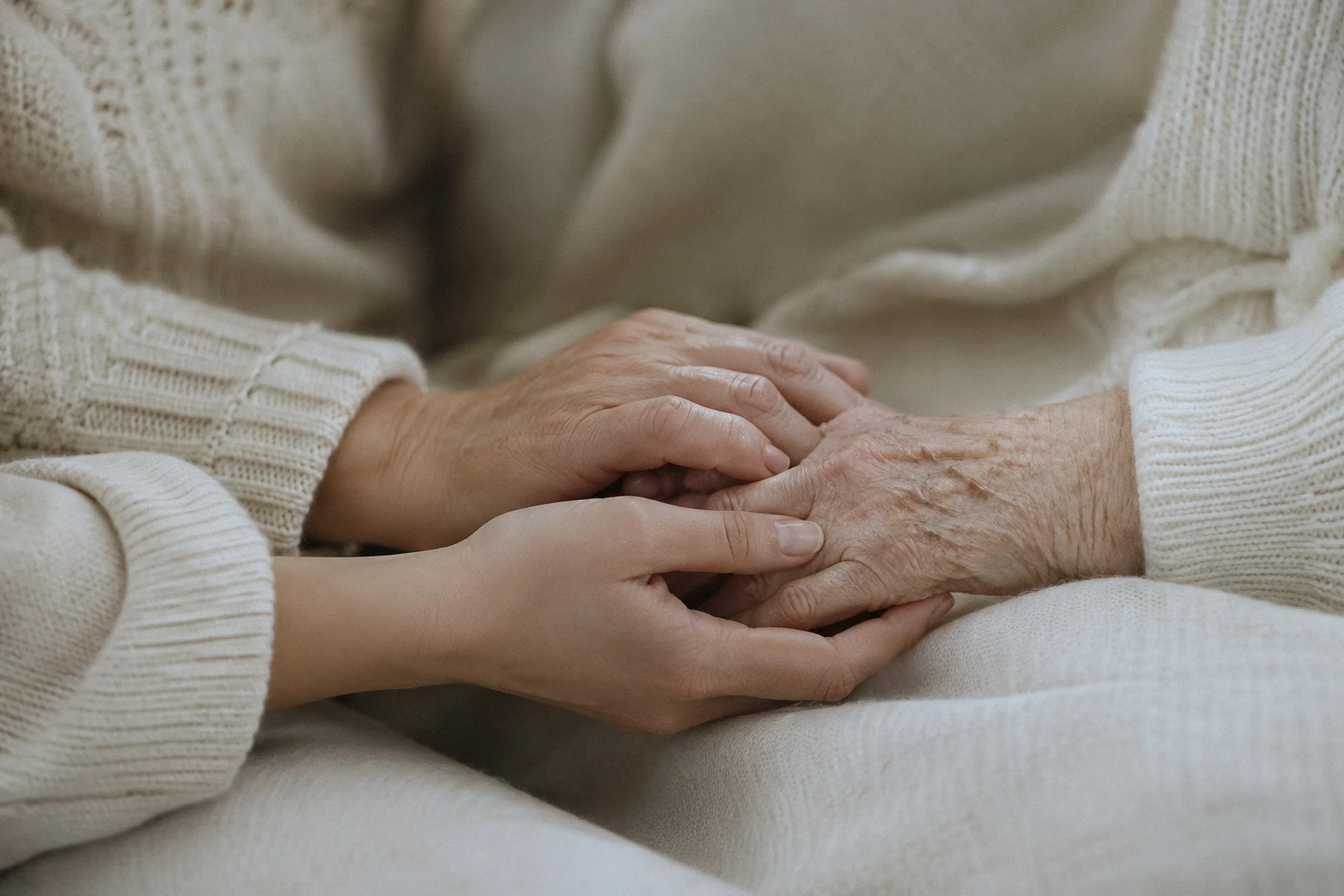
If a career break affects later promotion and income, its consequences can carry into savings, retirement benefits and the options open later in life. The check asks whether these consequences across later stages of the life cycle were considered when the decision was designed. The WLCE Index is being built to measure these connections between stages, and its data will support this check.
Between a woman's experience and a changed rule there is work to be done: research, data verification, methodology development, a pilot and an assessment of results. That work is what makes the principle a basis for decisions.

Apply the nine questions to one decision in your own organization.
Offer expertise or propose a partnership. Roles, access and responsibilities are agreed upon for each piece of work.

Become a member. Membership gives you verified member status and lets you participate in consultative polls, where every active member has an equal vote. Membership is private by default: it becomes public only if you choose to.

Fund a specific stage of the work. Research, data verification, methodology development, a pilot and an assessment of results all require support.

Choose the form of participation that fits your experience, your availability and the contribution you want to make.
Join WomafreesmFinancial support for Womafreesm helps build the WLCE Index and the Equal Consideration Standard. A gift can support the program as a whole or an agreed stage: the calculation framework, language adaptation, offline data collection, research in a particular country, data protection, analysis or publication.

For a major designated contribution, we agree on the scope of work, budget, verifiable outputs and reporting schedule. Reports show what has been produced, what it enables next and what limitations remain. The Standard's content, sampling, analysis and conclusions are governed by the research protocol, regardless of funding source.

Donations and membership are separate forms of participation. Recurring membership supports Womafreesm's ongoing work and provides verified member status, a personal membership ID and participation in consultative polls. Membership remains private unless you choose otherwise. Canceling stops future charges.

A research finding, a recommendation and an implemented change are recorded as distinct outcomes. Changing rules requires institutional decisions, implementation and follow-up evaluation.
Discuss Major SupportNo. Womafreesm is not a club or a campaign. It is infrastructure for turning women’s reality into facts, rules, and action.
We work for equal consideration in systems, institutions, and public decisions. The work is practical, evidence-based, and focused on changing rules.
No. The project is against rules that ignore women’s reality and make decisions incomplete for everyone.
No.
Womafreesm was not created to help women survive inside old rules.
We work with the root cause.
We change the rules themselves.
Because the work is built on transparent methodology, clear roles, privacy by default, and verifiable public logic.
To research, infrastructure, translation, coordination, legal work, tools, and the operational systems needed to make participation accountable.
No. There are different forms of participation, including research, volunteering, partnerships, membership, and donations.
No. Donation and membership are separate forms of participation with different rights, responsibilities, and governance roles.
No. Research logic, methodology, and conclusions must remain independent and transparent.
Womafreesm is being built by an international network of women, researchers, lawyers, partners, and local teams.
Yes. Public visibility is not required and is possible only with voluntary consent.
You will receive the relevant onboarding path for your form of participation and the next practical steps.
Because systems that ignore half of reality make weaker decisions for everyone. Better rules create better institutions.
Select your Telegram language