INFLUENCE
Your local case can get a route to the institutions that write the rules
We use analytics cookies to understand how the site is used. They stay off unless you accept them. Cookie Notice


What no one can change alone, we change together, from one case to a new rule.
Join the Assembly Submit case
Your local case can get a route to the institutions that write the rules
Partners and experts in other countries can work on your problem with you
Every partner vote weighs the same, whether your budget is small or large
Partnership is free; your mission, your name and your agenda stay yours
Women, organizations, specialists, journalists and supporters come to the Assembly with different questions. Answer one or two questions, and you will see what you gain and where to go.

Step 1 of 3
Step 2 of 3
Step 2 of 3
Step 3 of 3
If you are in immediate danger, contact your local emergency number first. Womafreesm does not replace emergency services.
When you can, open the help finder on the next page. It shows services that work today where you are.
Step 3 of 3
The help finder on the Protection Pathway page shows services that work today where you are and that fit your situation. Each contact comes with its opening hours and the source it was taken from, so you can see where to turn right now and decide what to do next.
Step 3 of 3
You describe what happened in your own words. The Assembly numbers the case, checks it and tells you what it found and what will be done. Once verified, it joins similar cases from other countries, so it counts. You can stay anonymous and leave only a safe contact.
Step 3 of 3
A repeating case is a systemic case. Submit it with what you already have: documents, numbers, the rule or practice. Here it can join the same pattern from other countries. Confirmed in several cases, it can support an Evidence Brief; with research, a Policy Brief.
Step 3 of 3
Your cases get a route to international decisions, with evidence from other countries behind them, and every partner vote weighs the same, whatever the budget. Partnership is free; your mission, governance and public voice stay yours. One procedure applies to all.
Step 3 of 3
Lawyers, researchers, doctors, economists and other specialists check cases and facts, analyze data and write briefs for decision-makers. You are invited task by task in your field and stay independent. Terms, authorship and mention of your name are agreed with you.
Step 3 of 3
Media partners receive new Assembly results before public release, help finding experts and verified context on the systemic issues they cover. Case data always stays confidential: partners work only with anonymized evidence that clearly states how strong it is.
Step 3 of 3
Womafreesm spreads donations across the six areas of its work, where they are needed most, and the Assembly is one of them. Donors have no say over findings, case decisions or how data is classified, whatever the size of the gift. Your support can stay private.
The Womafreesm World Women's Assembly is an international alliance of women, women's organizations, experts, lawyers, researchers and institutions that help each other seek changes in the laws, standards and decisions that shape women's lives. We examine real problems, check the facts, study the experience of different countries and prepare specific proposals together on what needs to change. Participants then combine their professional networks, media work, social media posts and joint appeals to draw attention to the problem, bring the proposals to the people who make decisions and push for them to be put into practice.
Each organization keeps its own mission and independence and chooses which initiatives it is ready to support and how it can help. Before joint work begins, participants agree on the goal and divide the tasks: who will prepare the legal arguments, who will help reach journalists, who will share materials with their audience or join the appeal.
You help one woman, then ten, then a hundred, and you keep meeting the same problem in new lives. Every act of help matters, but gradually it becomes clear: along with the consequences, the rules that keep bringing women to this point also have to change. Behind the stream of individual requests stands a question of how the system works and what in it must change.
Inside one country, this work can run into closed doors: requests go without a meaningful answer, proposals are put off for years, and the organization keeps proving on its own that change is needed. Yet beyond its borders there may be colleagues facing the same problem, researchers able to confirm its patterns and specialists who have already found an approach to solving it.
When this knowledge is divided by borders, languages and separate projects, each team has to walk much of the way again. While helping women cope with the consequences of existing rules, organizations themselves need support to influence how those rules change.
21%
of participants in the peace and security survey said they cannot influence their national government at all, though 62% see a chance to change things in their families and 51% at work.
67%
of the women's organizations surveyed said funding cuts had reduced their participation in humanitarian coordination and also in other spaces where decisions are made about their work.
The Assembly creates a space for working on these barriers together. An organization brings knowledge of women's real lives, researchers help test the findings, lawyers make the case for the necessary changes, and partners from different countries prepare and advance a common position. This is how local experience becomes part of the evidence base and of joint action aimed at a specific law, standard or institutional procedure.
The point of the Assembly is that women and organizations who deal every day with the consequences of existing rules can take part, together, in creating new ones.
Joint work is built around a specific task: what problem we want to solve, what the collected materials confirm, what change is needed and who has the authority to make it. Participants combine their knowledge and divide the work so that a shared goal gets a clear path to action.
Cases, data and research are checked, with a clear record of what is confirmed and what information is still missing. Comparable anonymized materials from different countries help reveal a recurring problem. Your organization can back its position with broader evidence, and women's experience can become the basis for well-founded proposals for change.
Organizations and specialists working on the same problem in different countries come together around a shared task and result. Together they compare approaches, identify needed expertise and divide the work. You can work with colleagues from other countries whose knowledge complements yours and help develop a solution in line with your team's capacity.
Participants prepare evidence reviews, recommendations, legal positions and proposals for standards that state clearly what needs to change and on what grounds. The Assembly sends the agreed documents to institutions in its own name. The contribution of organizations and specialists is recorded, and each document gets a specific aim and addressee.
Organizations from several countries can approach the same institution at the same time, with a shared evidence base and an agreed demand. The Assembly coordinates these actions and follows them through: the submission, the replies received and the changes actually confirmed. Participants see what stage the work has reached and what next step it now needs.
Join the Assembly so that your experience, knowledge and work become part of changes beyond what anyone can achieve alone. Tell us what problem you are working on and what you want to change: that is where our shared work begins.

Every Assembly document states how strong the evidence behind it is, from a personal testimony to a pattern confirmed across countries. That is what separates the Assembly's documents from an appeal to conscience: a decision-maker can see what stands behind every page.
Legal Rapid Response works now, with systemic errors: when several cases show the same error in a rule, Womafreesm lawyers prepare petitions and legal documents so that the rule itself changes.
An analytical document that brings case data, research and expert assessments together on one systemic problem once the pattern is confirmed in several cases: what happens, to whom and how often.
Practical recommendations for governments, international organizations and other decision-makers, prepared once research also stands behind the problem and aimed at changing a specific named rule.
A methodology or assessment framework for organizations in any country. Evidence confirmed across countries will underpin the Equal Consideration Standard now in development and the checks under it.
Equal Consideration Standard
A case is an event, a situation, a practice, a policy, a decision or a systemic problem affecting the rights, safety, opportunities or position of women. Cases are accepted from any country.

One case involving one woman or several women that reveals a systemic pattern: discrimination, refusal of a service, a breach of labor rights, violence, exclusion, a reputational attack.

A repeated problem at the level of a city, a country, a market, a law or an institution, affecting a significant number of women. Similar cases an organization has collected belong here.

A gap in legislation, standards, budget logic or institutional mechanisms, where the practice is lawful and the outcome for women is still systematically worse. Professional rules count too.

A problem that exists and stays hard to document because the data is missing. An open research question belongs here as well. This category connects to the Women's Life-Cycle Economy Index.

A situation that needs a fast response at the level of an institution or a partner. This is an accelerated review, not emergency help: if you are in danger, call your local emergency number.

An individual case is accepted when it shows a systemic problem. That rule keeps the evidence base focused on what can be changed at the level of a law, a standard, a budget or an institutional procedure.

A person or organization is named publicly only after explicit consent, and a case only at the level its submitter chose. Safety ranks above publicity. You can submit anonymously, with a safe way to reach you.
Every case takes the same route, in the same order.
A woman, a group of women, an organization, a researcher, a journalist or an institution from any country describes a situation, a practice, a rule or a systemic problem, in any language. The case receives a number.
First the case is sorted and marked by what it is about. After that the facts, the evidence, the local and legal context, consent and the safety of everyone involved are checked. The result is a Verified Case Note.
The case receives a category and an evidence level, from 1 for a personal testimony to 5 for systemic evidence. The level decides what can be built: an Evidence Brief from level 3, a Policy Brief from 4, a Standard at 5.
The case is reviewed by the Executive Director of the Assembly, who makes the decision. The decision can be one of five: an action, a record in the evidence base, a referral to a partner, waiting for data or a refusal.
Depending on the case: an Evidence Brief, a Policy Brief, an institutional submission, a public statement, an expert opinion or a Standard. A legal assessment is possible after the materials and jurisdiction are studied.
The result is published at the publicity level the submitter chose, and recorded in the Registry of Results: what is complete, what is in progress, what is blocked and why. No case is ever published without consent.
Most cases become part of the evidence base and strengthen similar cases. Cases for direct action are chosen by severity, scale and urgency. Either way, you receive a decision with the reason.
Every case carries a status. The status says where the case is right now and what happens next. To ask about it, reply to any message about your case from the same safe address or channel. These are all the statuses, in the order a case moves through them.

Women's and human rights organizations, foundations, universities, research centers, professional associations, legal, educational and media organizations from any country can join. Partnership is free, and your organization keeps its own mission, governance, staff, finances and public statements.
What your organization gains
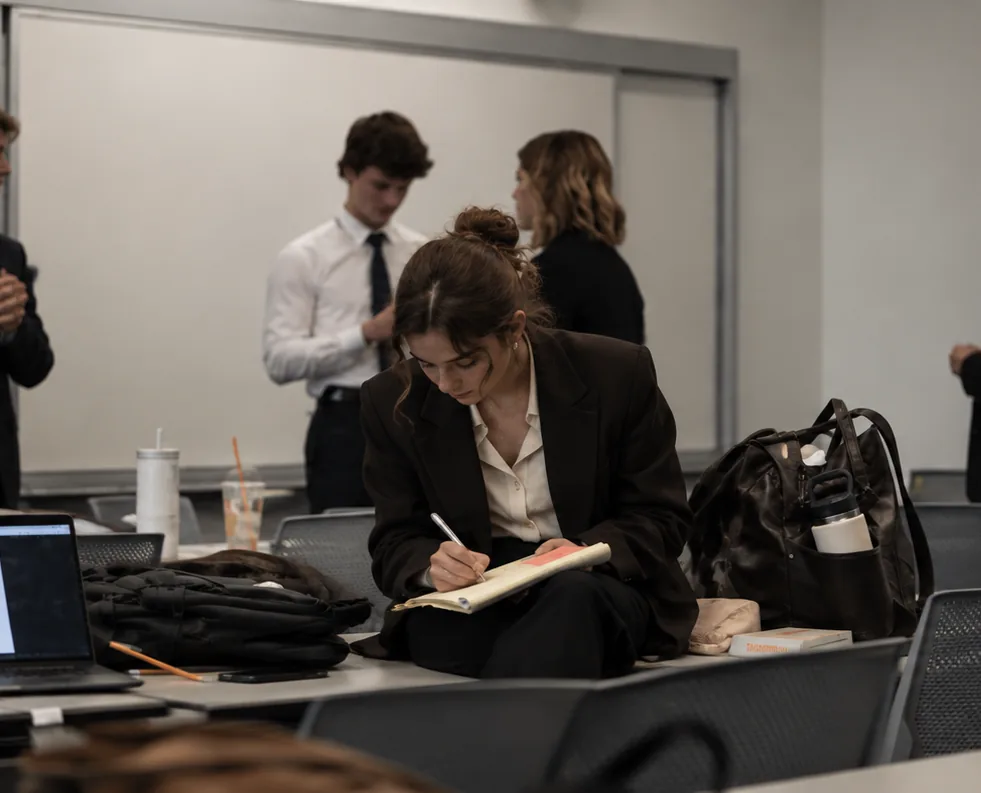
Lawyers, researchers, doctors, economists, data specialists and other professionals assess and verify cases, analyze data and prepare Assembly documents for decision-makers. You are invited task by task in your field, terms are agreed before each task, and authorship and public mention of your name are agreed with you.
Offer your expertise
The Assembly coordinates joint work. It is not a political party, not a public authority, and it does not speak on behalf of all women.
Legal Rapid Response is not a law firm, not a legal practice, not a rescue service and not an emergency line. The Assembly does not guarantee that a lawyer will be provided or that litigation will be funded.
If you are in immediate danger, contact your local emergency number first. Womafreesm does not replace emergency services.
The Assembly works under four founding documents, in effect since July 2026. Decisions rest on evidence, expert assessment and a fair procedure, and findings follow the evidence, whoever funds the work. The Assembly Council has been formed and is growing as representatives of new regions join.
To report a breach of the Assembly's rules, write to info@womafreesm.com.
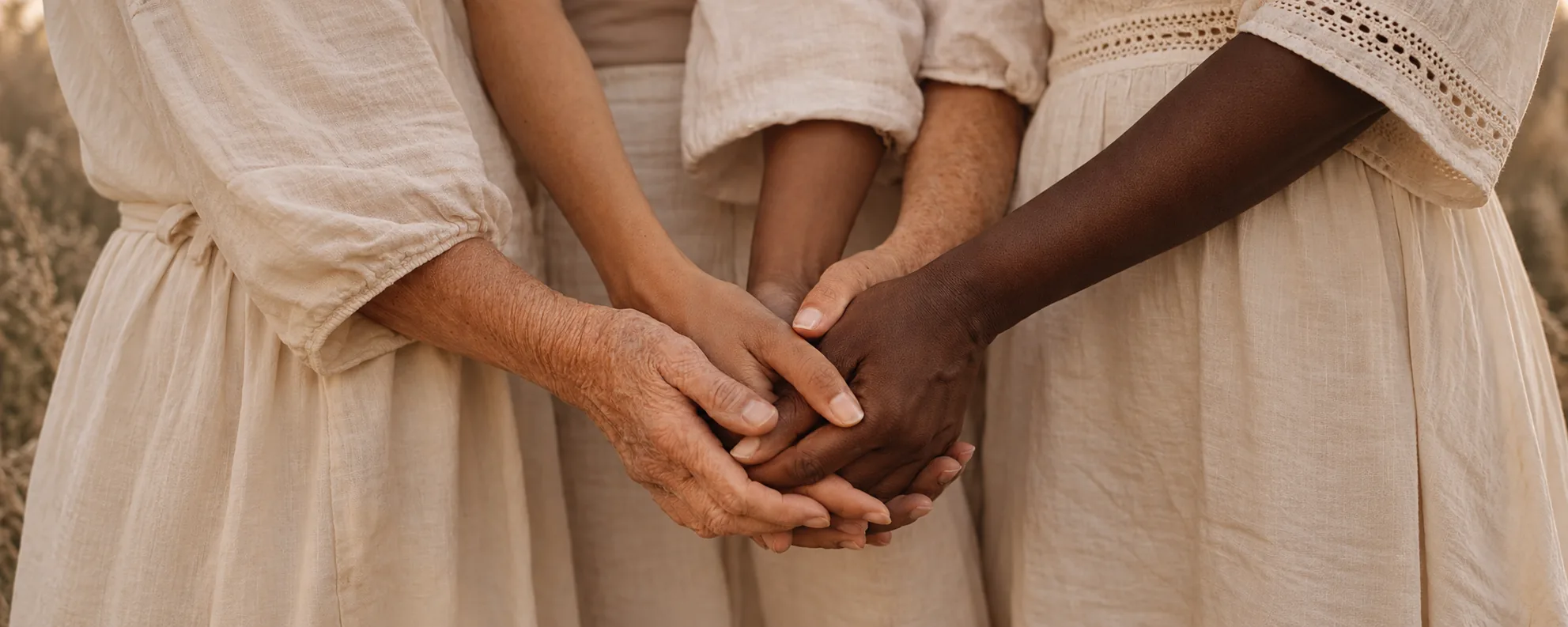
Alone, an organization is easy to overlook. Together, organizations, experts and women from many countries bring evidence that is much harder to ignore. If you have a case, represent an organization, bring professional expertise or report on women's rights, take your place in the Assembly.
You keep both. Your organization stays a separate legal entity and keeps its own mission, governance, staff, finances and public statements. Partnership is nonexclusive, so you can work with other networks too. Your name and logo appear on Assembly materials only after you agree in writing, and you always keep the right to speak in your own name.
The Assembly is built around results you can check. Every case gets a number and a decision with its reason. Joint documents carry a stated evidence level, so a decision-maker sees what stands behind them. The public Registry of Results, due to open in December 2026, will show what is complete, what is in progress, what is blocked and why.
Partnership is free. Financial support is voluntary, separate from admission, and has no effect on a partner's status or voice. The memorandum of cooperation creates no financial obligations between the parties. Submitting a case and joining the expert network are free as well.
The Assembly is strictly nonpartisan. It endorses no parties or candidates, and women with different political views work in it side by side. What unites them is shared standards and evidence about the rules that shape women's lives, and each finding stays within what its evidence level allows.
Decisions rest on the four founding documents, on evidence and on a fair procedure. Every case is reviewed by the Executive Director of the Assembly. Each participant with voting status has one equal vote, and no contribution changes its weight. The Assembly Statute sets out who holds which powers.
Findings follow the evidence level, whoever funds the work. Under the Code of Ethics and Conflict of Interest Policy, a donor has no right to influence a decision on a case, a finding or how data is classified, and under the Statute money does not make a vote heavier. Both documents set out the full rules on independence from funders and what the Assembly must publish about its activities and spending.
Your case is fully confidential by default. It is published only at the level you choose, anonymized or with your name, and any publication is agreed with you separately. You can stay anonymous as long as you leave a secure contact. Where publication could put anyone at risk, safety ranks above publicity, and a fully confidential case can still count as an anonymized record.
Anyone aged 18 or over, from any country: a woman, a group of women, an organization, a researcher, a journalist, a newsroom or an institution. You can stay anonymous or use a pseudonym if you leave a safe way to reach you: without one, the Assembly cannot tell you its decision or ask you a question.
The Assembly gives you a case number, then checks the case. After that you receive a decision with the reason through the contact you chose: whether this is a systemic failure, whom it concerns and what the Assembly will do. Most cases join the evidence base and strengthen similar cases; cases for direct action are chosen by severity, scale and urgency.
No. Legal Rapid Response works with systemic errors, not with single cases: Womafreesm lawyers prepare petitions and legal documents so that the rule itself changes. It is not a law firm or a rescue service. If you are in immediate danger, contact your local emergency number first. Womafreesm does not replace emergency services. For help with your own situation, start with the Womafreesm Women's Protection Pathway help finder.
To the Womafreesm World Women's Assembly. A practice that harms many women under one rule is the kind of case it is built for. Submit it as a systemic case with the documents and numbers you already have. Once the same pattern is confirmed in several cases, the Assembly can build an Evidence Brief on it.
At the Womafreesm World Women's Assembly, her case is checked and given an evidence level from 1 to 5, from a personal testimony to systemic evidence confirmed across countries. When the same pattern shows up in several cases, it can reach level 3 and support an Evidence Brief. Research evidence at level 4 can support a Policy Brief aimed at changing the rule, and level 5 a Standard.
Organizations that join now can take part in the first working groups and contribute to the first joint documents of the Assembly. Admission follows the same written procedure for every organization, and partnership is free. Every partner keeps its own mission, governance and public voice.
Select your Telegram language