


Marina Sukhomlinova:
Biography
Founder & President of Womafreesm and Architect of a New Infrastructure for Women’s Influence
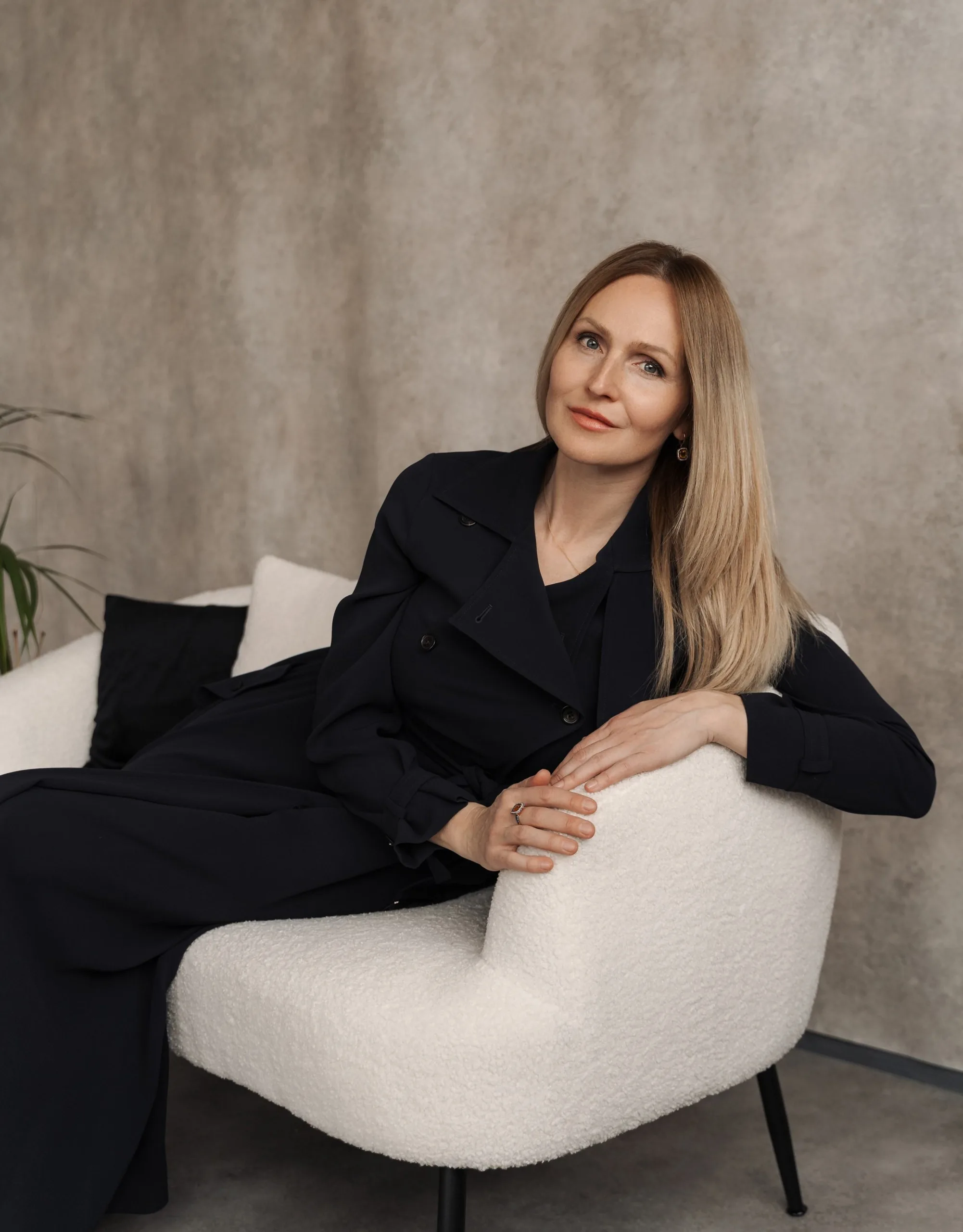
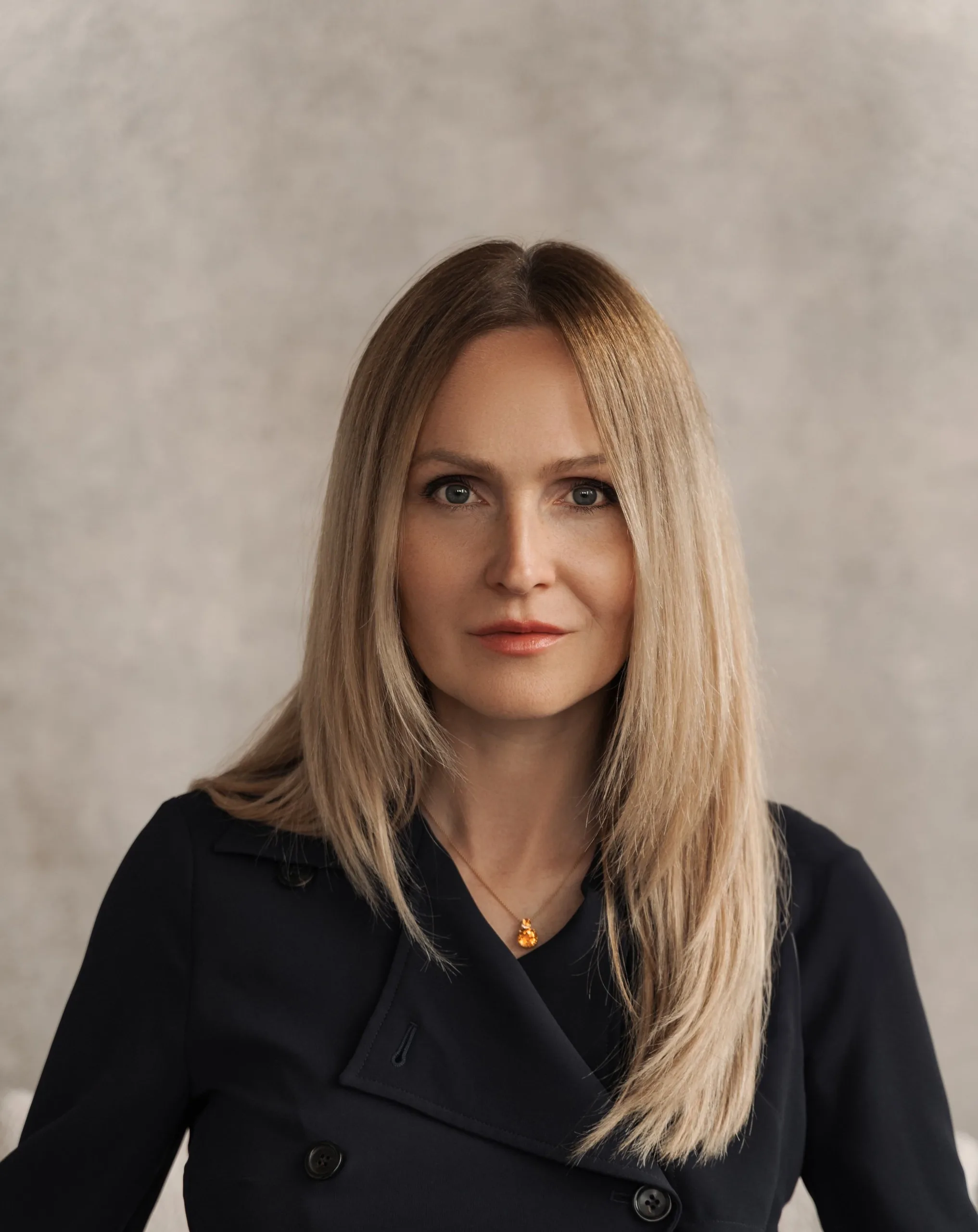
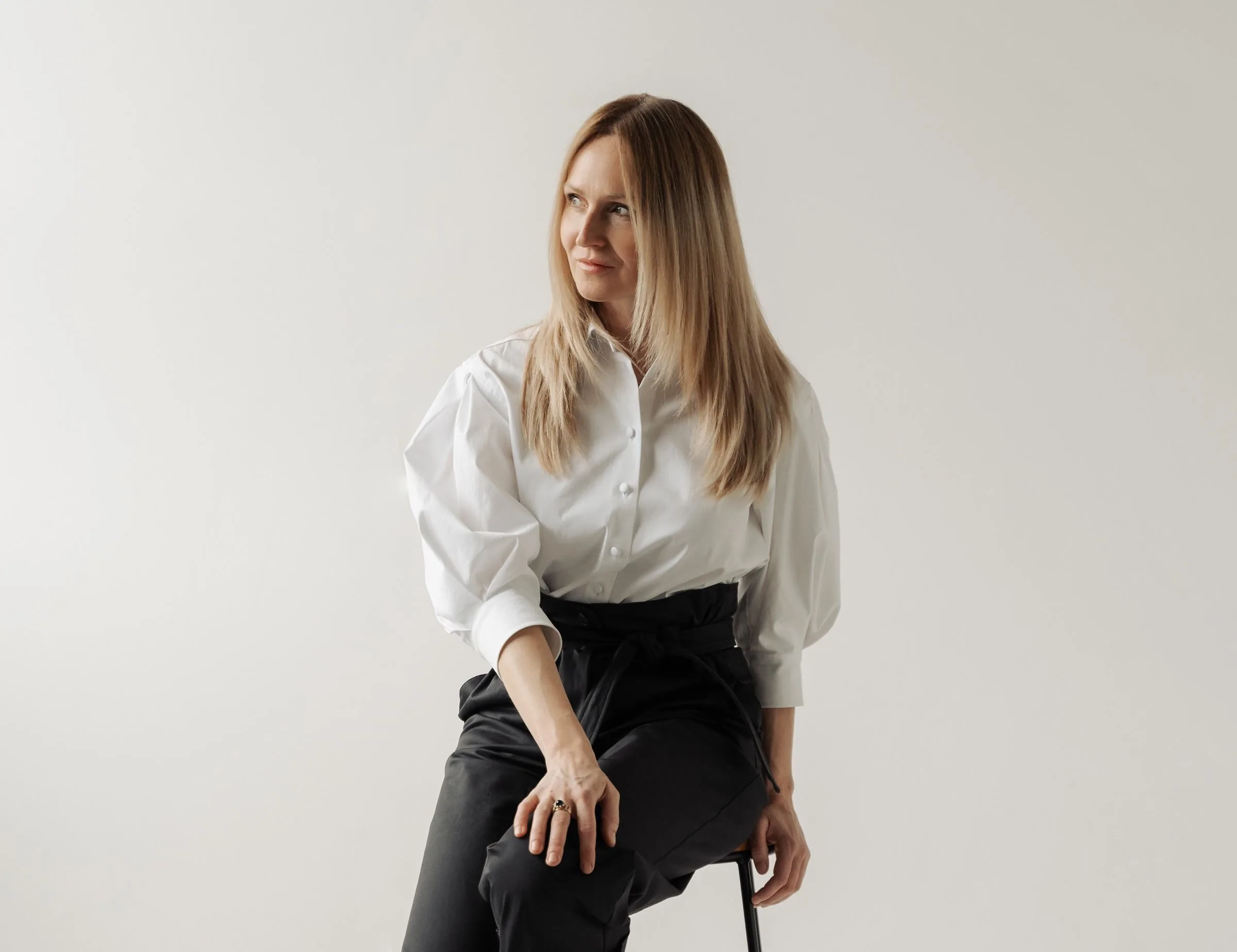
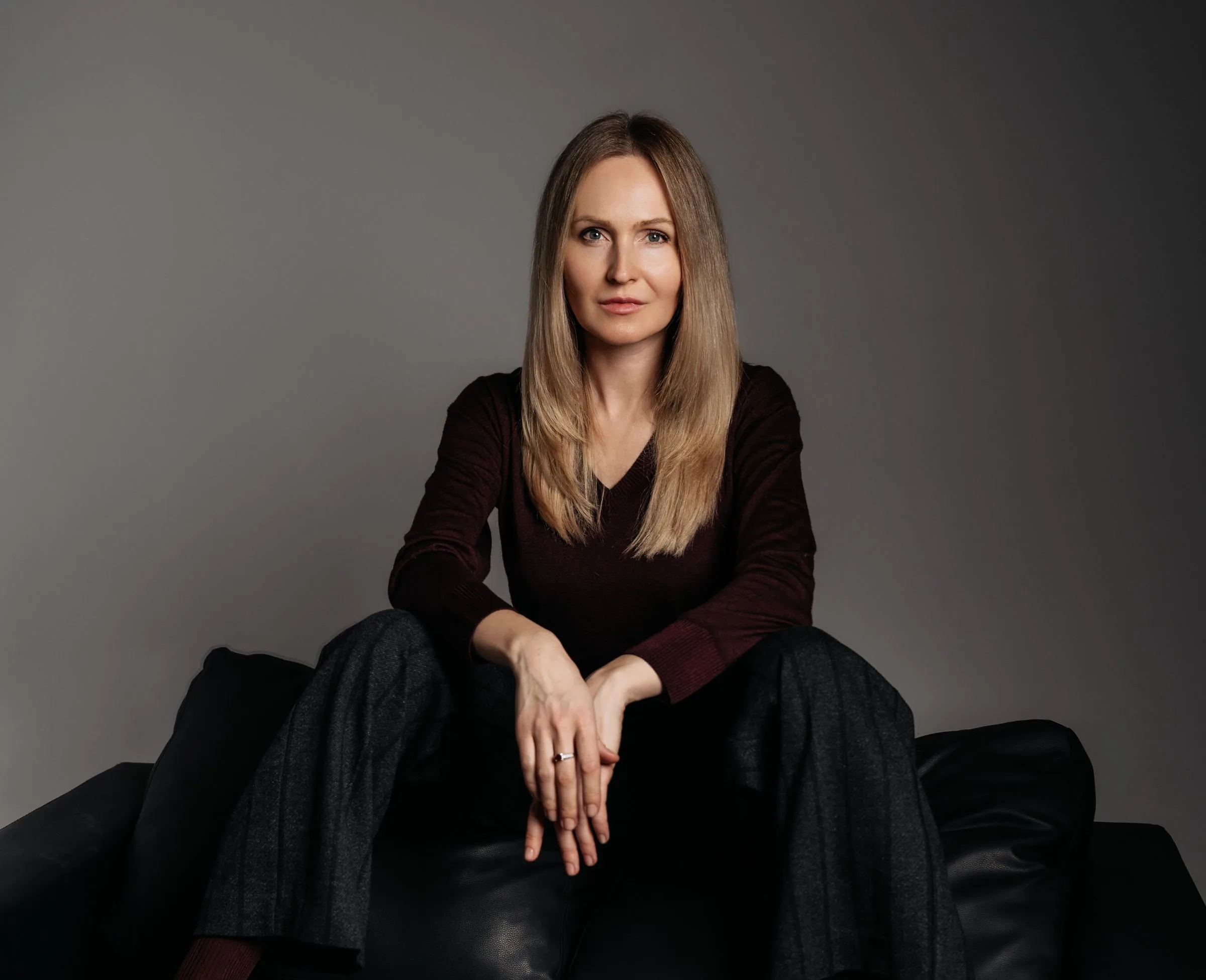
Marina Sukhomlinova is the Founder and President of The World Organization of Women Nations Womafreesm, architect of a new infrastructure for women’s influence, a researcher of women’s visibility, and the author of concepts focused on the equal consideration of women’s realities within social, economic, and institutional systems.
Her path has taken shape at the intersection of journalism, psychology, political psychology, civic initiatives, social projects, and many years of direct work with women. Yet a formal biography explains only part of who she is.
To understand why she became the creator of Womafreesm, and why her ideas resonate with women across different countries, one has to see the deeper line running through her life: from her earliest years, Marina learned to recognize the moments when a system loses contact with the human being, when the language of justice becomes a façade, when women’s experience is pushed to the margins, and when the cost of that exclusion becomes too high for entire generations.
As a child, she saw far too early what many people prefer not to notice. Systems do not always protect. Sometimes they leave a person alone with their pain. Sometimes they force people to adapt to rules that were never designed with their reality in mind. Sometimes they place blame on the very person they have refused to hear. Marina’s story was therefore never a story of adaptation.
From her earliest years, another impulse was taking shape within her: to see where something had failed, to name it, to search for another principle, and to build a different foundation.
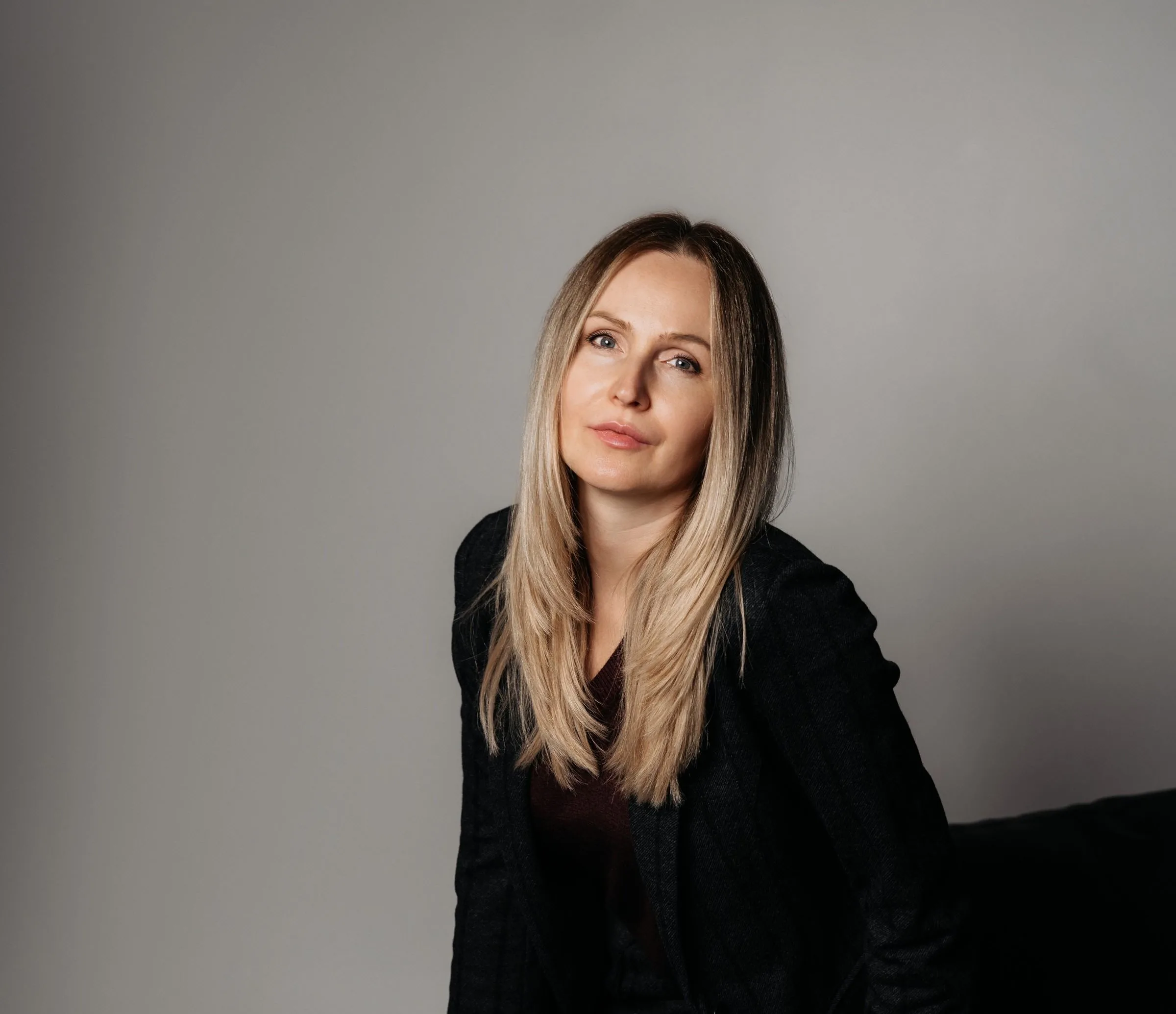
According to Marina’s recollection, one childhood episode later became almost symbolic of her entire work. She spoke quickly and thought quickly, and at home she was often asked to slow down because adults could not always keep pace with the speed of her speech. Yet for three months at kindergarten, her teachers were convinced that she could not speak. Only when Marina asked why every other child had been given a role in a school performance except her did the adults discover, with astonishment, that the child in front of them had a vivid command of language, a strong inner world, and a powerful sense of agency. They had simply failed to see her.
Very early, she encountered one of the central themes of her future life: the problem is often not the absence of a voice, but a system that does not consider that voice worth hearing.
School reinforced this understanding even more harshly. Marina saw early how institutions can treat a strong, vivid, independent personality when that personality steps outside a convenient script. A girl can be placed in the corner instead of having her leadership recognized. She can be shamed instead of having her potential acknowledged. She can be excluded, mocked, or turned into an example of discipline and obedience. In such conditions, many people learn to make themselves smaller. Marina chose another path.
When she was not given roles, she began writing scripts. When others tried to push her aside, she changed the logic of the rules themselves, creating something the system could no longer do without. When she was not taken seriously, she gathered people around her and built spaces in which her voice became not an exception, but an organizing force.
This pattern appeared again and again. As a teenager, Marina wrote scripts for her class and for a KVN comedy team, created artistic initiatives, organized a school circle where children gathered to read poetry to one another, established a museum of Ukrainian art and served as its guide, experimented with journalism, launched her own television program, wrote texts, and built communities and structures around ideas.
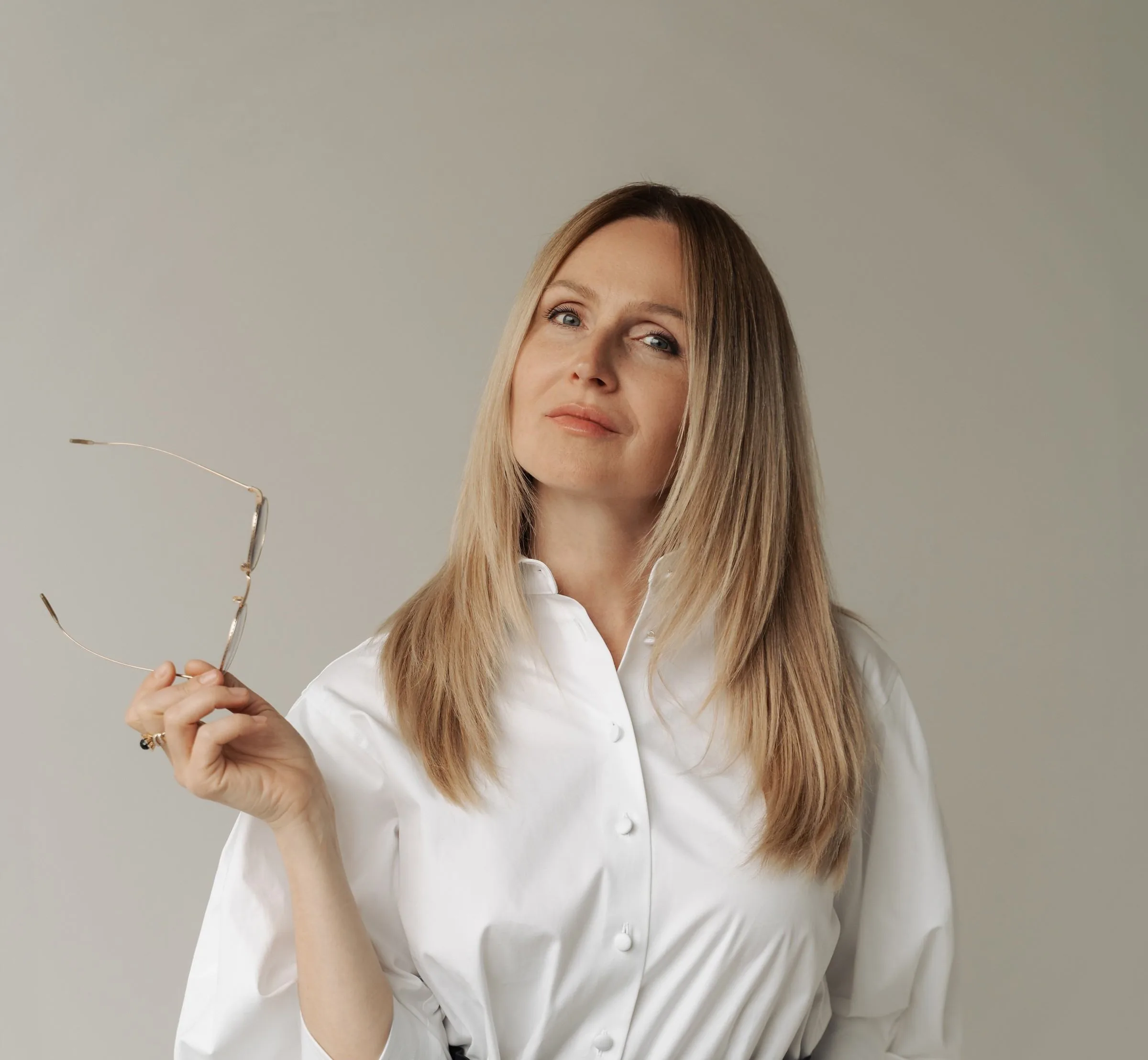
From an early age, her path was shaped by the same inner impulse: when there is no space capable of holding something alive and meaningful, that space has to be created.
She also saw another side of social systems very early. A violation was too often reframed as the problem of the person who had experienced it. A child who spoke about a violation of personal boundaries by an adult risked becoming inconvenient to the system rather than being heard by it.
These encounters gave Marina one of the hardest lessons of her life: when a system loses the ability to distinguish truth from status, it stops protecting the individual and begins protecting itself.
This understanding would later become one of the foundations of her philosophy. A woman’s problem too often begins at the moment when her reality ceases to be treated as a fact.
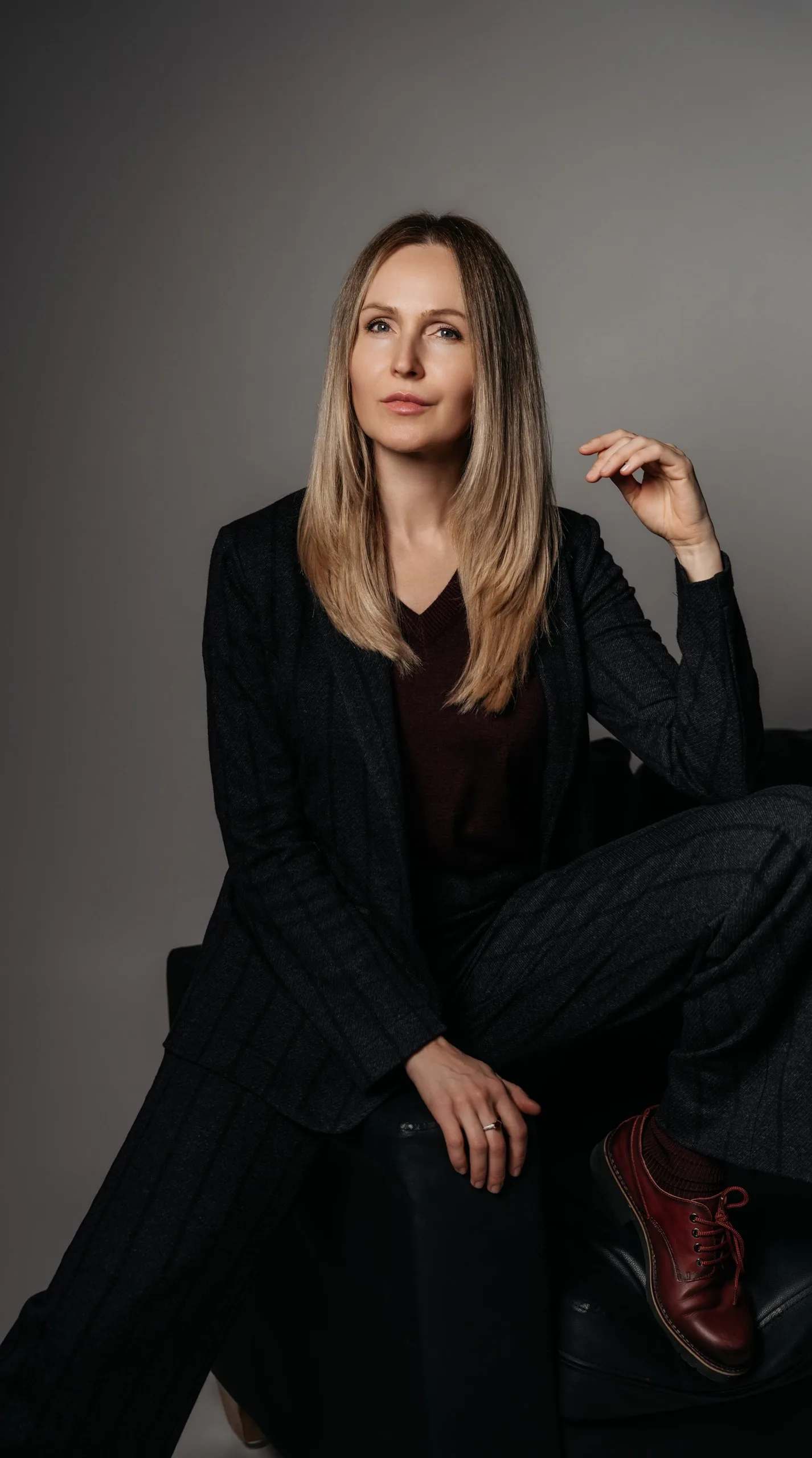
In adolescence, another important capacity emerged alongside this awareness: the ability to look beneath the surface and recognize falsehood behind the right words.
Marina sensed early when lofty values were being used as decoration for someone else’s interests, when the language of service was being replaced by the language of influence, and when ideology diverged from its actual substance. She was interested not only in what was being said, but in the architecture behind the words. It was during this period that one of the qualities that would later become central to her leadership began to take clear shape: the ability to see when the failure lies not on the surface, but within the structure itself.
Alongside this came another ability: the refusal to wait for ideal conditions, and the instinct to create them herself. At seventeen and a half, Marina organized a large charity rock concert at the Meteor Sports Palace in Dnipro, Ukraine. She had no starting capital, no adult status, no telephone at home, and none of the conventional resources that would normally make such a task possible. Yet she built the entire process through will, intelligence, precise calculation, and a strong sense of responsibility. She designed a system of commitments, conducted negotiations, brought people together around the task, and managed the process so that each completed step opened the possibility of the next. Even then, a quality that would later become one of the foundations of her leadership was already visible: the ability to create a functioning structure where none yet exists.
Her path later moved naturally into the social, civic, and political sphere. She had always been interested in how ideas become structures, and how structures shape human lives. Journalism, civic initiatives, social projects, public movements, team leadership, the creation of her own formats, and participation in environments where decision-making becomes especially visible all became part of her life. She repeatedly observed how systems fight consequences while leaving causes intact. For Marina, these were never disconnected roles. They were stages in a gradual movement toward the space of real influence, where meaning either acquires a structure or remains powerless.
A distinct thread in this path was her early attention to the different ways men and women are perceived in public and political life. This interest later took on a research dimension.
Marina studied political psychology, examined the perception of political figures through a gender lens, and prepared a research paper on the subject.
It was during this period that one of the future themes of Womafreesm became even clearer in her thinking: women’s leadership is too often judged not on its substance, but through a distorted system of perception.
A turning point came around the age of forty, when she had to close a project that had once seemed like the work of her life. Then the war began, followed by relocation to England. Within a short historical period, Marina lost her familiar environment, her former role, the context she knew, her social and professional foundations, and the external architecture of life on which people often rely almost unconsciously. For many, such a rupture becomes a point of collapse. For her, it became a point of profound reconstruction.
During this period, her attention turned even more deeply toward the question of inner human support, while at the same time expanding further toward the level of systems. She saw that when external structures collapse, a person can suddenly see with extraordinary clarity which foundations within them are alive and authentic, and which have been borrowed from the outside for an entire lifetime.
By then, Marina already had a substantial educational and professional foundation. Her first higher education was in psychology and social pedagogy, her second in economics, and her third in management of foreign economic activity. She studied psychoanalysis and behaviorism, and during COVID-19 she volunteered in support work with people experiencing stress, uncertainty, and difficult life circumstances.
But in London, this accumulated knowledge ceased to be simply a collection of competencies. It became an instrument for deep personal and professional work.
As she continued her training in professional approaches to supporting people through transformational methods, Marina conducted her first one hundred sessions with women as part of her certification requirements. It was during this mandatory practical stage, through real conversations, real lives, recurring pain, similar internal fractures, and equally difficult survival strategies, that an understanding emerged which would later become one of the foundations of Womafreesm.
Again and again, she saw the same underlying pattern. The women in front of her were strong, intelligent, sensitive, and profound. Their difficulty did not lie in a lack of ability. It lay in the rules within which they had learned to live for years. In norms that diminished the value of their experience. In language that taught them to doubt themselves. In models of relationships, work, motherhood, social participation, and self-perception in which women were expected to adapt to someone else’s construction instead of having the right to their own measure of reality.
It was then that a formula finally crystallized in Marina’s thinking, one that would later become a point of recognition and liberation for many women: Women are not broken. The system is.
For Marina, this was a conclusion born from the whole of her life. From childhood invisibility. From school shame used as an instrument of power. From early experiences in which a violation could be turned into a problem belonging to the person who named it. From watching lofty words conceal emptiness. From years moving through journalism, psychology, political psychology, civic initiatives, public projects, and direct work with women. All of it was gradually converging on the same conclusion: too much of what women are told to “fix” within themselves is actually the consequence of systems that have failed to take their realities fully into account.
This is where Womafreesm began.
The World Organization of Women Nations Womafreesm was created as a response to a profound civilizational failure. When institutions, markets, law, medicine, work, culture, politics, and public life are designed without fully accounting for women’s realities, women are forced to pay for that failure through their psychological well-being, their bodies, careers, motherhood, safety, visibility, language, time, and future. Where their experience has not been translated into the language of data, procedures, standards, decisions, and norms, it remains private pain. And private pain does not change the rules.
Under Marina Sukhomlinova’s leadership, Womafreesm is being built as a global infrastructure for women’s influence, translating women’s experience into language, data, procedures, standards, and systemic change. Its purpose is not to inspire women to endure more effectively, but to change the very principles through which women’s lives are understood, evaluated, and incorporated into the laws, institutions and decisions a society lives by. Womafreesm brings together realities that for too long have remained fragmented, unproven, unheard, and unable to acquire collective force.
The organization grows from the conviction that real change begins when women’s experience stops being treated as private emotion and becomes a foundation for new laws, new cultural codes, new standards of visibility, new rules of participation, and a new level of social maturity.
Today, Marina Sukhomlinova speaks about women neither as an outside observer nor as a commentator on a social agenda. Behind her words stands a lived path in which the personal, public, political, psychological, and organizational have converged into a single task.
Her approach brings together psychological depth, experience in civic and public work, research thinking, and the ability to translate a large idea into a concrete system of action. Her work therefore extends beyond a conversation about the position of women alone and raises a broader question about the quality of the systems in which people live.
This is why Marina’s path to Womafreesm was neither accidental nor sudden. She had been moving toward it throughout her life.
Marina Sukhomlinova is building more than an international organization and more than a new philosophy. She is creating a new architecture for women’s presence in the world.
An architecture in which women’s realities receive equal consideration, women’s voices acquire institutional weight, women’s experience becomes a foundation for new decisions, and women themselves cease to be figures of adaptation and become full participants in shaping the future.
This is her work. This is her expertise.
This is the logic of her leadership.
Marina Sukhomlinova
Founder & President, Womafreesm
Architect of a New Infrastructure for Women’s Influence